

In today’s IoT and smart systems, sensors play a critical role in enabling devices to perceive and respond to their environment. From smart lighting and security systems to industrial automation and healthcare monitoring, a variety of sensing technologies are widely used—most commonly PIR (Passive Infrared) sensors, ultrasonic sensors, and camera-based systems. Each of these technologies offers distinct advantages, but also comes with inherent limitations in terms of accuracy, environmental adaptability, privacy, and power consumption.
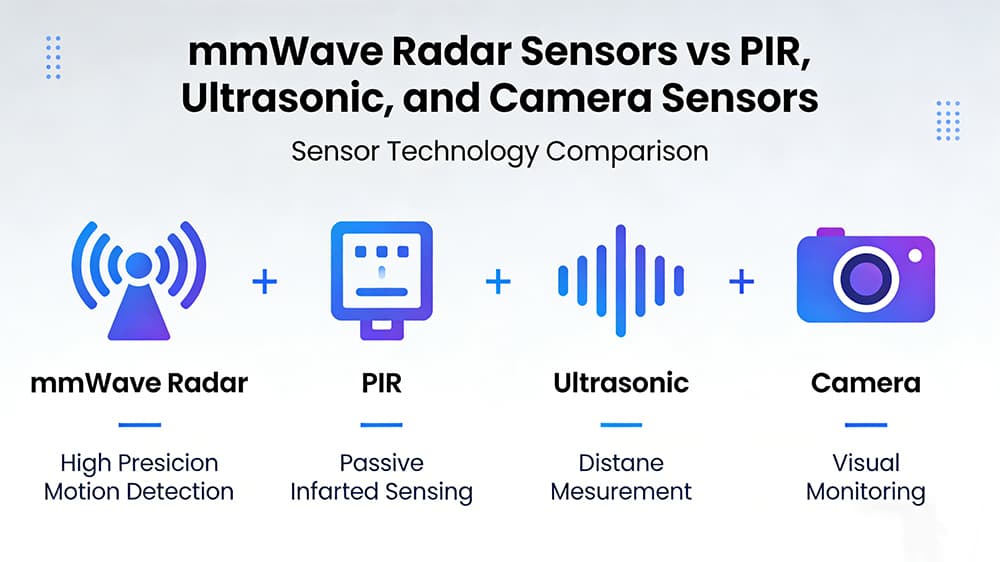
As applications become more complex, choosing the right sensing technology is no longer a simple decision. For example, traditional motion-based sensors like PIR may struggle to detect stationary occupants, while ultrasonic sensors can be affected by environmental conditions such as airflow or noise. Camera-based systems, although powerful, often raise concerns around privacy and require higher processing power and bandwidth. These trade-offs make it essential to clearly understand how different sensor types perform in real-world scenarios.
This is where mmWave radar sensors are emerging as a compelling alternative. Operating at high frequencies, mmWave radar enables precise detection of both motion and micro-movements—such as breathing or slight body shifts—making it particularly effective for true presence detection. In addition, it offers strong performance across various lighting and environmental conditions, while maintaining privacy by not capturing visual data.
In this article, we will compare mmWave radar with PIR, ultrasonic, and camera sensors to help you identify the most suitable technology for your specific application. If you’re new to mmWave radar and want to understand its fundamentals, you can first explore our pillar guide: Millimeter-Wave Radar Sensors: Technology, Types, and Applications.
To better understand the differences between sensing solutions, it’s important to first look at how each technology works and where it is typically used. Below is a brief overview of the four main sensor types discussed in this article.
A mmWave radar sensor operates by transmitting high-frequency electromagnetic waves (typically in the 24 GHz or 60 GHz range) and analyzing the reflected signals from objects in its environment. By measuring parameters such as distance, velocity, and angle, it can accurately detect both movement and extremely subtle micro-motions.
Unlike traditional motion sensors, mmWave radar enables true presence detection, meaning it can identify stationary humans through small physiological movements like breathing. It also performs reliably in low-light, high-humidity, or visually obstructed environments, making it suitable for smart homes, healthcare, and industrial automation.
A PIR (Passive Infrared) sensor detects changes in infrared radiation emitted by warm objects, such as the human body. It does not actively emit signals; instead, it passively senses temperature differences within its field of view.
PIR sensors are widely used in motion detection applications, including automatic lighting and basic security systems, due to their low cost and low power consumption. However, they can only detect movement and typically fail to recognize stationary individuals, which limits their effectiveness in scenarios requiring continuous presence detection.
An ultrasonic sensor works by emitting high-frequency sound waves and measuring the time it takes for the echo to return after bouncing off an object. This allows it to calculate distance and detect object presence.
Ultrasonic sensors are commonly used for proximity sensing and distance measurement, such as in parking assistance systems or industrial automation. While they can detect both moving and stationary objects, their performance may be affected by environmental factors like air temperature, humidity, and airflow.
A camera-based sensor relies on visual data captured through image or video streams, often combined with computer vision or AI algorithms to detect, classify, and track objects or people.
These systems offer rich information and high accuracy in complex scenarios, making them suitable for applications like surveillance, people counting, and facial recognition. However, they typically require higher processing power, greater bandwidth, and raise privacy concerns, especially in sensitive environments such as homes, offices, or healthcare facilities.
When comparing sensing technologies for occupancy and motion detection, mmWave radar vs PIR is one of the most common considerations. While PIR sensors have long been the default choice due to their simplicity and low cost, mmWave radar introduces a new level of detection capability and reliability.
The most significant difference lies in what each sensor can detect.
· PIR sensors can only detect motion by sensing changes in infrared radiation. If a person remains still, the sensor may no longer register their presence.
· mmWave radar sensors, on the other hand, enable true presence detection. They can detect not only movement but also micro-motions such as breathing and slight body shifts.
This makes mmWave radar far more suitable for scenarios where continuous occupancy awareness is required, such as smart offices or elderly care.
PIR sensors are relatively simple and can be prone to false triggers. For example, sudden temperature changes, sunlight, or heat sources (like air conditioners or pets) may affect detection accuracy.
mmWave radar offers higher sensitivity and precision, allowing it to distinguish human presence more reliably. It can also provide additional data such as distance and movement patterns, improving overall system intelligence.
Environmental factors significantly impact PIR performance:
· PIR sensors depend on temperature differences, so their effectiveness can drop in environments where ambient temperature is close to human body temperature.
· They also require a clear line of sight and are affected by obstacles.
In contrast, mmWave radar performs consistently across a wide range of conditions:
· Works in darkness, bright light, and varying temperatures
· Can penetrate certain materials (e.g., plastic, glass), enabling concealed installation
· Less affected by environmental noise
PIR sensors are typically used in:
· Motion-activated lighting
· Basic intrusion alarms
· Low-cost, power-sensitive applications
mmWave radar sensors are better suited for:
· Smart lighting with presence-based control
· HVAC systems with occupancy awareness
· Healthcare monitoring (e.g., fall detection, sleep monitoring)
· Smart offices and meeting rooms
Feature | mmWave Radar Sensor | PIR Sensor |
Detection Type | Motion + Presence (micro-motion) | Motion only |
Stationary Detection | Yes | No |
Accuracy | High | Moderate |
Environmental Sensitivity | Low | High |
Penetration Capability | Yes (some materials) | No |
Privacy | High (no imaging) | High |
Typical Use Cases | Smart sensing, healthcare, IoT | Basic motion detection |
In summary, while PIR sensors remain a cost-effective option for simple motion detection, mmWave radar provides a more advanced and reliable solution for modern applications that require continuous, accurate presence sensing.
Another important comparison in modern sensing applications is mmWave radar vs ultrasonic sensor. While both technologies can detect objects and measure distance, they rely on entirely different physical principles—electromagnetic waves versus sound waves—which leads to notable differences in performance, reliability, and use cases.
Ultrasonic sensors typically operate within a limited range (usually a few meters) and are primarily used for distance measurement. Their resolution is sufficient for basic proximity detection but can be less precise when identifying small or subtle movements.
In contrast, mmWave radar sensors offer:
· Longer detection range
· Higher resolution and accuracy
· Ability to detect micro-movements, enabling true presence detection
This makes mmWave radar more suitable for applications that require fine-grained sensing, such as human presence or motion tracking.
Ultrasonic sensors are more sensitive to environmental conditions because sound waves are influenced by the medium they travel through. Factors such as:
· Temperature changes
· Humidity levels
· Airflow or wind
can affect signal propagation and lead to measurement errors.
mmWave radar, on the other hand, is far less affected by these variables. It maintains stable performance across:
· Varying temperatures
· High humidity environments
· Airflow or dust
This makes it a more reliable option in dynamic or harsh environments.
Ultrasonic sensors rely on the time-of-flight of sound waves, which inherently limits their response speed, especially over longer distances. In addition, soft or irregular surfaces may absorb sound waves, reducing detection reliability.
mmWave radar operates using high-frequency electromagnetic signals, enabling:
· Faster response times
· More consistent detection performance
· Better handling of different object materials and surfaces
This results in improved real-time sensing capabilities, especially in applications requiring continuous monitoring.
Ultrasonic sensors are commonly used in:
· Parking assistance systems
· Liquid level measurement
· Simple proximity detection in industrial equipment
mmWave radar sensors are better suited for:
· Indoor human presence detection
· Smart home automation
· Industrial safety monitoring
· People tracking and occupancy sensing
Feature | mmWave Radar Sensor | Ultrasonic Sensor |
Detection Principle | Electromagnetic waves | Sound waves |
Detection Range | Medium to long | Short to medium |
Precision | High | Moderate |
Micro-motion Detection | Yes | No |
Environmental Sensitivity | Low | High |
Response Speed | Fast | Moderate |
Material Impact | Minimal | Can be affected (absorption) |
Typical Use Cases | Presence sensing, smart systems | Distance & proximity sensing |
In summary, while ultrasonic sensors remain a practical choice for basic distance measurement and proximity detection, mmWave radar offers clear advantages in precision, environmental robustness, and real-time performance, making it a stronger candidate for advanced IoT and smart sensing applications.
When evaluating sensing solutions for advanced applications, the comparison between mmWave radar and camera-based sensors often comes down to a balance between accuracy, privacy, and system complexity. While cameras provide rich visual information, mmWave radar offers a fundamentally different approach that prioritizes reliability and privacy.
One of the most critical differences is how data is captured.
· Camera sensors collect visual data, which may include identifiable images or video footage. This raises privacy concerns, especially in sensitive environments such as homes, offices, restrooms, or healthcare facilities.
· mmWave radar sensors do not capture images. Instead, they detect motion and presence through reflected electromagnetic signals, making them inherently privacy-friendly.
For applications where user privacy is a priority, mmWave radar is often the preferred choice.
Camera performance is highly dependent on lighting conditions:
· Requires adequate illumination for accurate detection
· May need additional components such as infrared night vision for low-light environments
· Can be affected by glare, shadows, or visual obstructions
In contrast, mmWave radar operates independently of lighting:
· Works equally well in complete darkness or bright light
· Less affected by visual obstacles such as smoke, fog, or dust
· Provides consistent performance across varying environments
Camera-based systems typically require:
· High processing power (for image or video analysis)
· AI or computer vision algorithms
· Significant data bandwidth and storage
This increases both system complexity and power consumption.
mmWave radar sensors, by comparison:
· Generate simpler data outputs (e.g., presence, distance, motion)
· Require lower processing overhead
· Are more suitable for low-power embedded systems
Cameras can achieve high accuracy in object recognition and classification, especially when combined with AI. However, their performance may degrade in challenging conditions such as poor lighting or occlusion.
mmWave radar excels in:
· Detecting presence through obstacles (e.g., behind plastic panels)
· Identifying micro-movements for stationary individuals
· Maintaining stable detection regardless of visual complexity
While it may not provide detailed visual identification, it delivers highly reliable presence and motion sensing.
Camera-based sensors are commonly used in:
· Video surveillance systems
· Facial recognition and identity verification
· Retail analytics and people counting
mmWave radar sensors are better suited for:
· Privacy-sensitive environments (homes, offices, healthcare)
· Smart lighting and HVAC control
· Occupancy and presence detection
· Sleep monitoring and fall detection
Feature | mmWave Radar Sensor | Camera Sensor |
Data Type | Signal-based (non-visual) | Image/video |
Privacy | High | Low |
Lighting Dependency | None | High |
Environmental Robustness | Strong | Moderate |
Processing Requirements | Low | High |
Power Consumption | Low to moderate | High |
Detection Capability | Presence + motion | Visual recognition |
Typical Use Cases | Smart sensing, occupancy | Surveillance, analytics |
In summary, while camera sensors are powerful tools for visual analysis and identification, mmWave radar provides a more privacy-conscious, reliable, and energy-efficient solution for presence detection and smart sensing applications—especially in environments where visual monitoring is not ideal.
After comparing mmWave radar with PIR, ultrasonic, and camera-based sensors, its advantages become clear—especially in applications that demand accuracy, reliability, and privacy. Below are the key benefits that make mmWave radar sensors an increasingly popular choice in modern IoT and smart systems.
Unlike traditional sensors that only detect motion, mmWave radar enables true presence detection. It can identify even the smallest human movements, such as breathing or slight posture changes.
This capability ensures that:
· Occupants are not “lost” when they remain still
· Systems can respond more intelligently to real occupancy conditions
mmWave radar provides high-resolution sensing, allowing it to:
· Detect fine movements and subtle changes
· Differentiate between objects and human presence
· Reduce false positives caused by environmental noise
This level of precision is particularly valuable in applications like smart offices, healthcare monitoring, and security systems.
One of the biggest strengths of mmWave radar is its ability to operate reliably across a wide range of conditions:
· Works in complete darkness or bright light
· Resistant to temperature fluctuations and humidity
· Less affected by dust, smoke, or airflow
This makes it suitable for both indoor and semi-challenging environments where other sensors may struggle.
Unlike camera-based systems, mmWave radar does not capture or process visual data. It only analyzes reflected signals to determine presence and movement.
This makes it ideal for:
· Residential environments
· Offices and meeting rooms
· Healthcare and elderly care facilities
where privacy is a critical concern.
mmWave signals can penetrate certain non-metallic materials such as plastic, glass, or thin enclosures. This allows for:
· Hidden or embedded installation within devices or behind panels
· More flexible product design without exposing the sensor
· Improved aesthetics in smart home and commercial applications
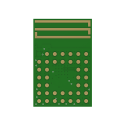
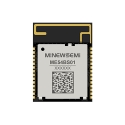
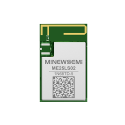
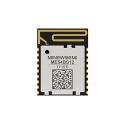
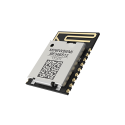
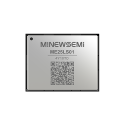
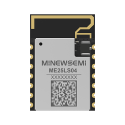
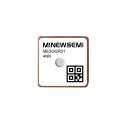
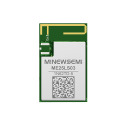
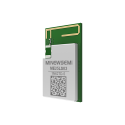
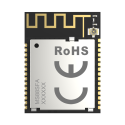
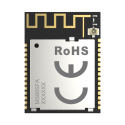
In practical deployments, many developers are already leveraging compact, ready-to-integrate solutions such as MinewSemi’s mmWave radar modules, which are designed to simplify integration while maintaining high detection performance. You can explore available options here: https://en.minewsemi.com/wireless-modules/millimeter-wave-radar
While mmWave radar is more advanced than PIR or ultrasonic sensors, it still maintains relatively efficient power consumption, especially when compared to camera-based systems that require continuous image processing.
This balance of performance and efficiency makes it well-suited for:
· Battery-powered devices
· Always-on sensing applications
· Edge computing systems
In summary, mmWave radar sensors combine high accuracy, environmental robustness, and privacy protection in a single technology, making them a strong candidate for next-generation sensing solutions across a wide range of industries.
Selecting the right sensor depends on your specific application needs. Instead of evaluating each technology separately, the table below provides a clear and practical guide to help you quickly identify the most suitable option based on key criteria.
Selection Criteria | Recommended Sensor Type | Reason |
Motion detection only | PIR Sensor | Cost-effective and sufficient for simple motion-triggered scenarios |
Presence detection (static + moving) | mmWave Radar Sensor | Detects micro-movements like breathing, ensuring continuous occupancy detection |
Distance / proximity sensing | Ultrasonic Sensor | Reliable for short-range distance measurement |
Object identification / recognition | Camera Sensor | Provides visual data for AI-based analysis |
Low-light / no-light environment | mmWave Radar Sensor | Not affected by lighting conditions |
Privacy-sensitive environment | mmWave Radar / PIR / Ultrasonic | No image capture, privacy-friendly |
Complex or dynamic environments | mmWave Radar Sensor | Strong resistance to environmental interference |
Ultra-low power applications | PIR Sensor | Minimal power consumption |
High accuracy requirement | mmWave Radar Sensor | High resolution and sensitivity |
Budget-sensitive projects | PIR / Ultrasonic Sensor | Lower cost for basic functionality |
High-end smart systems | mmWave Radar / Camera Sensor | Advanced sensing capabilities |
· Choose PIR sensors for simple, low-cost motion detection.
· Choose ultrasonic sensors for basic distance and proximity measurement.
· Choose camera sensors when visual recognition or image data is required.
· Choose mmWave radar sensors when you need accurate, reliable, and privacy-friendly presence detection, especially in complex environments.
By aligning your application requirements with the strengths of each sensor type, you can make a more informed decision and build a system that delivers both performance and efficiency.
Choosing the right sensing technology is essential for building reliable and efficient IoT systems. As we’ve explored, each sensor type—PIR, ultrasonic, camera, and mmWave radar—has its own strengths and limitations.
· PIR sensors remain a practical choice for simple motion detection with low power consumption.
· Ultrasonic sensors are effective for short-range distance and proximity sensing.
· Camera-based systems provide rich visual data for advanced analytics but come with higher complexity and privacy concerns.
· mmWave radar sensors stand out with their ability to deliver accurate presence detection, strong environmental adaptability, and privacy-friendly operation.
As smart applications continue to evolve, the demand for more reliable and intelligent sensing is increasing. In this context, mmWave radar is rapidly becoming a key technology for next-generation solutions—especially in areas such as smart buildings, healthcare, and industrial automation.
If you’d like to explore the fundamentals of this technology in more detail, we recommend reading our pillar guide: Millimeter-Wave Radar Sensors: Technology, Types, and Applications.
For developers and solution providers looking to implement mmWave sensing in real-world projects, you can also explore MinewSemi’s mmWave radar modules, designed to simplify integration while delivering high-performance detection across a wide range of applications.












 Store
Store