

Millimeter-wave technology has rapidly evolved in recent years, enabling more accurate and reliable sensing across smart buildings, healthcare, and industrial automation. However, not all radar solutions are the same. Understanding different mmWave radar sensor types is essential for selecting the right technology for your specific application.
Different types of mmWave sensors vary in operating frequency, detection capability, antenna architecture, and level of integration. Some are optimized for long-range motion detection, while others are designed for high-resolution micro-motion sensing such as breathing or static human presence. In addition, solutions range from discrete radar chips to fully integrated mmWave radar module designs that simplify development and accelerate time-to-market.
This guide provides a complete overview of the major mmWave radar sensor types, explains how they differ, and outlines their typical use cases. Whether you are designing a smart home device, an indoor occupancy system, or an industrial monitoring solution, understanding these distinctions will help you choose the most suitable radar architecture.
One of the most common ways to categorize mmWave radar sensor types is by operating frequency. Among the various types of mmWave sensors available today, 24 GHz and 60 GHz solutions are the most widely used in commercial and industrial applications. Each frequency band offers distinct advantages in terms of range, resolution, cost, and performance.
24 GHz radar sensors operate in the lower millimeter-wave frequency band and are widely adopted due to their technical maturity and stable performance. This frequency band provides a balanced combination of detection capability, system complexity, and cost efficiency.
24 GHz sensors typically support medium-range detection and deliver reliable motion sensing in indoor environments. They are well-suited for detecting moving targets and general human presence. While their resolution is lower than 60 GHz solutions, they offer sufficient accuracy for most standard occupancy and motion detection scenarios.
One of the key strengths of 24 GHz radar is its cost-effectiveness. The ecosystem is mature, hardware design is relatively straightforward, and development resources are widely available. For projects requiring scalable deployment, a 24 GHz mmWave radar module (https://en.minewsemi.com/wireless-modules/millimeter-wave-radar) can provide an efficient balance between performance and budget.
Human presence detection
Motion sensing systems
Smart lighting control
Basic indoor occupancy monitoring
60 GHz radar sensors operate at a higher frequency, enabling shorter wavelengths and significantly improved spatial resolution. This allows for more precise target detection and better separation of multiple objects within a confined area.
Thanks to their higher resolution, 60 GHz sensors can detect extremely subtle movements, such as breathing or small body shifts. This makes them suitable for applications requiring static presence detection or fine motion analysis.
The 60 GHz band typically experiences less congestion compared to lower frequency ranges, which enhances interference resistance in dense indoor environments. This improves reliability in complex smart building or industrial scenarios.
Health monitoring systems
Indoor tracking and positioning
Smart building occupancy management
Advanced presence detection solutions
Sensor Type | Primary Function | Detects Static Targets | Multi-Target Support | Output Type | Typical Applications | Complexity Level |
Presence Detection Sensor | Detects whether a person is present in a defined area | Yes | Limited | Presence status (occupied / unoccupied) | Smart lighting, HVAC control, energy management | Low to Medium |
Motion Detection Sensor | Detects moving objects | No (movement required) | Limited | Motion trigger signal | Security systems, automatic doors, lighting control | Low |
People Counting Sensor | Counts number of people in a space | Yes | Yes | Occupancy number | Retail analytics, office space management, public facilities | Medium |
Tracking Radar Sensor | Tracks real-time position of targets | Yes | Yes | Distance, angle, coordinate data, trajectory | Indoor positioning, healthcare monitoring, industrial safety | High |
By understanding how frequency affects performance, developers can better evaluate which mmWave radar sensor type aligns with their accuracy requirements, installation environment, and product goals.
Beyond frequency and detection capability, mmWave radar sensor types can also be categorized based on antenna configuration and system architecture. The number of antennas and signal processing structure directly influence angular resolution, detection accuracy, and environmental adaptability. Understanding these architectural differences is essential when selecting the right mmWave radar module for advanced applications.
A single-antenna radar system typically uses one transmitting (TX) and one receiving (RX) channel. Its structure is relatively simple, with lower hardware complexity and reduced signal processing requirements.
In contrast, multi-antenna radar systems use multiple transmitting and/or receiving antennas. This configuration enables spatial signal analysis, allowing the system to estimate not only distance but also angle and direction of targets.
The main architectural difference lies in spatial diversity. Multi-antenna systems capture more information from reflected signals, enabling richer environmental perception.
Single-antenna radar systems are generally suitable for basic detection tasks such as motion sensing or simple presence detection. They provide reliable distance and velocity information but have limited angular resolution.
Multi-antenna radar systems offer:
Improved angular resolution
Better target separation
Enhanced multi-object detection
More precise spatial positioning
As a result, multi-antenna architectures significantly improve overall detection accuracy, especially in environments with multiple targets.
Single-antenna radar is well-suited for:
Smart lighting control
Basic occupancy sensing
Motion-triggered systems
Cost-sensitive IoT devices
Multi-antenna radar is ideal for:
People counting systems
Indoor positioning
Smart building analytics
Industrial monitoring
For applications requiring spatial awareness rather than simple detection, multi-antenna-based mmWave radar modules provide a clear performance advantage.
MIMO (Multiple-Input Multiple-Output) radar systems represent a more advanced antenna architecture. By using multiple transmitting and receiving antennas in coordinated patterns, MIMO radar significantly increases virtual antenna array size. This results in much higher angular resolution and more accurate target localization.
Compared with basic multi-antenna systems, MIMO architectures can distinguish targets that are very close together in space.
MIMO mmWave radar sensors perform exceptionally well in complex indoor environments where reflections, obstacles, and multiple moving targets are common. The enhanced spatial resolution allows the system to better differentiate between overlapping signals and reduce false detections.
This makes MIMO radar particularly suitable for crowded spaces, smart retail environments, and advanced occupancy analytics.
MIMO radar relies on sophisticated signal processing algorithms, including beamforming, angle-of-arrival estimation, and target clustering. These advanced techniques enable:
Real-time coordinate output
Precise trajectory tracking
Robust multi-target discrimination
Due to the increased computational requirements, MIMO-based solutions are often integrated into high-performance mmWave radar module designs that combine antenna arrays, RF front-end, and embedded processing capabilities.
By understanding antenna configuration and architectural differences, developers can better align radar system complexity with application requirements — from simple single-antenna detection systems to advanced MIMO-enabled spatial sensing platforms.
When evaluating different mmWave radar sensor types, integration level is a key consideration. Developers typically choose between a discrete radar chip and a fully integrated mmWave radar module. The decision affects development complexity, customization flexibility, and time-to-market.
Feature | Discrete mmWave Radar Chip | Integrated mmWave Radar Module |
Integration Level | RF chip only | Chip + antenna + MCU + algorithms |
RF Design Required | Yes (antenna tuning, layout, EMI optimization) | No (pre-optimized RF design) |
Development Complexity | High | Low to Medium |
Customization Flexibility | Very high | Moderate |
Time-to-Market | Longer | Faster |
Target Users | OEMs with RF expertise | IoT manufacturers, system integrators |
Discrete radar chips provide maximum design flexibility but require strong RF engineering capabilities and longer validation cycles.
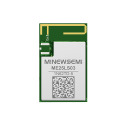
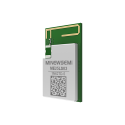
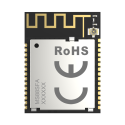
mmWave radar modules simplify integration by offering a ready-to-use solution with optimized hardware and embedded detection algorithms.
For most IoT applications—such as smart buildings, healthcare monitoring, and industrial automation—integrated modules offer a more efficient deployment path. Pre-certified solutions reduce engineering risk and accelerate product development while maintaining reliable sensing performance.
If you are exploring ready-to-integrate solutions, you can review available mmWave radar module options here:
https://en.minewsemi.com/wireless-modules/millimeter-wave-radar
Choosing the right architecture ultimately depends on your internal technical resources, customization needs, and project timeline.
After reviewing classification by frequency, detection capability, and architecture, the table below provides a consolidated overview of the major mmWave radar sensor types. This comparison helps developers quickly evaluate which solution best fits their technical and application requirements.
Sensor Type | Frequency | Detection Capability | Typical Detection Range | Accuracy Level | Typical Applications | Integration Level |
24 GHz Presence Sensor | 24 GHz | Static presence + motion detection | Short to medium (indoor room-level) | Moderate | Smart lighting, HVAC control, energy management | Chip or mmWave radar module |
60 GHz Presence Sensor | 60 GHz | Static presence + micro-motion detection | Short to medium (high precision) | High | Smart homes, healthcare monitoring, office occupancy | Primarily mmWave radar module |
Motion Detection Sensor | 24 / 60 GHz | Moving object detection | Medium | Moderate | Security systems, automatic doors, lighting triggers | Chip or module |
People Counting Sensor | 24 / 60 GHz | Multi-target detection, occupancy counting | Medium (zone-based) | Medium to High | Retail analytics, workspace management | Mostly module-based |
Tracking Radar Sensor (MIMO) | 60 GHz (commonly) | Real-time position tracking, trajectory analysis | Medium | High to Very High | Indoor positioning, elderly care, industrial safety | Advanced mmWave radar module |
Frequency impacts resolution and sensitivity, with 60 GHz generally offering higher spatial precision.
Detection capability defines whether the sensor focuses on presence, motion, counting, or tracking.
Accuracy level increases with antenna complexity and signal processing sophistication.
Integration level reflects whether the solution is typically deployed as a discrete chip or as a fully integrated mmWave radar module.
In real-world IoT deployments, module-based solutions are increasingly preferred because they reduce RF design complexity while delivering optimized detection performance across different types of mmWave sensors.
This overview provides a structured foundation for selecting the most suitable radar sensor type based on performance requirements, deployment environment, and integration strategy.
Selecting the right mmWave radar sensor type depends on multiple factors, including application needs, environment, performance requirements, and development constraints. Understanding these considerations ensures optimal system performance and cost-efficiency.
Presence detection: Choose sensors capable of static human detection for smart lighting, HVAC control, or occupancy monitoring.
Motion detection: Opt for sensors optimized for moving objects, such as security systems or automatic doors.
People counting or tracking: Use multi-target or MIMO radar modules for retail analytics, indoor positioning, or industrial monitoring.
The sensor’s functionality must match the specific use case to ensure reliable operation.
Indoor vs. outdoor: Consider reflections, obstacles, and interference. Higher frequency (60 GHz) and multi-antenna or MIMO architectures perform better in complex indoor spaces.
Obstruction penetration: mmWave radar can detect through certain non-metallic materials, but layout and mounting position can affect performance.
Proper placement and architecture selection help maximize detection accuracy.
For basic presence detection, single-antenna 24 GHz sensors are sufficient.
Applications requiring micro-motion detection, multi-target separation, or trajectory tracking benefit from 60 GHz multi-antenna or MIMO sensors.
Higher angular and distance resolution generally require more advanced radar modules with embedded signal processing.
Lower frequency, single-antenna, or discrete chip solutions tend to be more cost-effective and consume less power.
High-resolution, MIMO, or fully integrated modules may have higher upfront cost but reduce development effort and improve long-term reliability.
Consider total system cost, including design, testing, and deployment, not just the hardware price.
Discrete radar chips require in-house RF expertise, antenna design, and algorithm development.
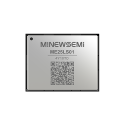
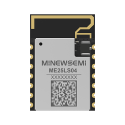
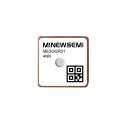
Integrated mmWave radar modules simplify deployment with built-in antennas, MCUs, and pre-configured detection algorithms.
For IoT product development with limited RF resources, modules reduce complexity, accelerate time-to-market, and provide a more predictable integration process.
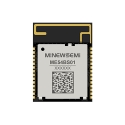
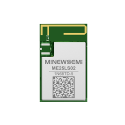
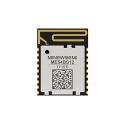
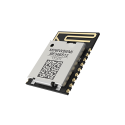
For example, MinewSemi’s mmWave radar modules offer ready-to-use solutions with optimized hardware and embedded detection algorithms, making them ideal for smart home, healthcare, and industrial applications.
By evaluating these factors—application, environment, accuracy, cost, and integration complexity—developers can select the most suitable mmWave radar sensor type and ensure reliable and efficient deployment.
Millimeter-wave radar technology offers a variety of sensor types, each designed for specific detection needs and application scenarios. From presence detection and motion sensing to people counting and tracking, different mmWave radar sensor types provide varying levels of accuracy, range, and integration complexity. Understanding these differences is crucial for designing reliable IoT solutions in smart homes, healthcare, industrial monitoring, and building automation.
Selecting the right sensor type ensures optimal performance, cost-efficiency, and faster product deployment. Factors such as operating frequency, detection capability, antenna architecture, and integration level should all be considered when making a choice.
For a deeper understanding of millimeter-wave radar technology, you can refer to our comprehensive pillar article on mmWave radar sensors.













 Store
Store