

Choosing the right wireless connectivity is one of the most important decisions when designing an Internet of Things (IoT) device. Whether you're building a wearable, smart home product, industrial sensor, or connected appliance, the wireless module you select directly affects battery life, communication range, data transfer speed, and overall user experience.
Among today's wireless technologies, Bluetooth and Wi-Fi are the two most widely adopted options. Although they both enable wireless communication, they are designed for different purposes and are often used in different types of IoT devices.
So, which is better: a Bluetooth module or a Wi-Fi module?
The short answer is it depends on your application.
· Choose a Bluetooth module if your device is battery-powered, transmits relatively small amounts of data, and primarily communicates with nearby devices.
· Choose a Wi-Fi module if your product requires direct Internet access, high-speed data transfer, or continuous cloud connectivity.
· For many smart products, combining Bluetooth and Wi-Fi delivers the best user experience by simplifying device setup while maintaining reliable cloud communication.
This guide compares Bluetooth modules and Wi-Fi modules across the factors that matter most—including power consumption, communication range, data rate, security, cost, and real-world IoT applications—helping you select the right wireless technology for your next project.
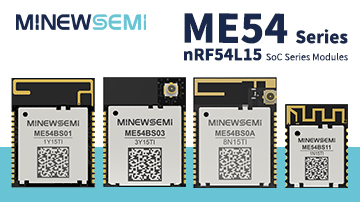
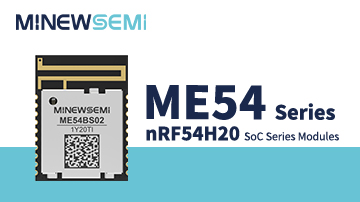
A Bluetooth module is a compact wireless communication module that enables embedded devices to exchange data using Bluetooth technology. It integrates the Bluetooth SoC, RF circuitry, antenna, crystal oscillator, and supporting components into a ready-to-use solution, allowing developers to add wireless connectivity without designing complex RF hardware.
Today, most Bluetooth modules are based on Bluetooth Low Energy (BLE), which is specifically designed for low-power IoT applications. BLE minimizes energy consumption by allowing devices to remain in sleep mode for most of the time and wake only when communication is required.
As a result, Bluetooth modules are widely used in battery-powered products that need reliable short-range communication while maximizing battery life.
Typical Bluetooth module features include:
· Bluetooth Low Energy (BLE) connectivity
· Ultra-low power consumption
· Secure pairing and AES encryption
· Bluetooth Mesh networking
· Over-the-air (OTA) firmware updates
· Fast integration with pre-certified RF design
Because of these advantages, Bluetooth modules have become the preferred choice for wearable devices, smart sensors, electronic shelf labels, asset tracking tags, medical devices, and many other low-power IoT applications.
A Wi-Fi module is a wireless communication module that enables embedded devices to connect directly to local wireless networks and the Internet. Similar to Bluetooth modules, it integrates the RF front end, processor, memory, and wireless protocol stack into a compact package, significantly simplifying product development.
Unlike Bluetooth, Wi-Fi is designed for high-bandwidth communication and continuous network connectivity. It allows devices to exchange large amounts of data, communicate directly with cloud platforms, and support remote control through mobile applications.
Modern Wi-Fi modules support standards such as Wi-Fi 4, Wi-Fi 5, and Wi-Fi 6, with newer solutions also supporting Wi-Fi 6E and Wi-Fi 7 for higher throughput and lower latency.
Typical Wi-Fi module features include:
· Direct Internet connectivity
· High-speed data transmission
· Cloud communication
· Remote device management
· OTA firmware updates
· Integration with smart home ecosystems
Wi-Fi modules are commonly used in products that require continuous online connectivity, such as smart appliances, security cameras, industrial gateways, smart speakers, and home automation systems.
Bluetooth and Wi-Fi are not competing technologies—they solve different connectivity challenges.
Bluetooth focuses on low power consumption and efficient local communication, while Wi-Fi excels at high-speed networking and Internet connectivity. Understanding their strengths and limitations is essential for selecting the right wireless solution and avoiding unnecessary design compromises.
In the next section, we'll compare Bluetooth modules and Wi-Fi modules across key technical factors, including power consumption, communication range, data rate, security, development cost, and Internet connectivity, to help you determine which technology best fits your IoT application.
Although Bluetooth and Wi-Fi are both widely used in IoT, they are designed for different goals. Bluetooth focuses on low-power, short-range communication, while Wi-Fi is optimized for high-speed networking and direct Internet access.
The following comparison highlights their key differences.
Feature | Bluetooth Module | Wi-Fi Module |
Best For | Battery-powered IoT devices | Cloud-connected IoT devices |
Communication Range | 10–100 m (Long Range mode can extend much farther) | 30–100 m indoors |
Data Rate | Up to 2 Mbps (BLE) | Hundreds of Mbps to several Gbps |
Power Consumption | Very low | Moderate to high |
Internet Connectivity | Via smartphone or gateway | Direct Internet access |
Battery Life | Months to years | Days to weeks (battery-powered devices) |
Typical Applications | Wearables, sensors, beacons | Cameras, appliances, gateways |
Development Cost | Lower system power requirements | Higher power supply requirements |
Quick Tip: Choose Bluetooth for low-power, battery-operated devices. Choose Wi-Fi when high bandwidth and continuous Internet connectivity are essential.
Power consumption is one of the biggest differences between Bluetooth and Wi-Fi.
Bluetooth Low Energy (BLE) is specifically designed for battery-powered devices. It keeps the radio in sleep mode most of the time and wakes only when data needs to be transmitted, allowing many IoT products to operate for months or even years on a single battery.
Wi-Fi maintains a continuous connection with the network, resulting in higher energy consumption. While modern Wi-Fi modules include power-saving modes, they generally consume more power than Bluetooth.
Best for: Bluetooth
The effective communication range depends on factors such as antenna design, transmit power, and the surrounding environment.
Bluetooth typically covers 10–100 meters and can achieve significantly longer distances using Bluetooth Long Range mode or Bluetooth Mesh networking.
Wi-Fi generally provides broader indoor coverage and connects devices directly to a wireless access point, making it well suited for homes, offices, and industrial facilities.
Best for: Tie (depends on deployment scenario)
Data transmission requirements vary widely across IoT applications.
Bluetooth is designed to transfer relatively small amounts of data efficiently, such as sensor readings, control commands, and health information.
Wi-Fi offers substantially higher bandwidth, making it the preferred choice for video streaming, cloud synchronization, image transfer, and frequent OTA firmware updates.
Best for: Wi-Fi
Bluetooth primarily enables device-to-device communication and usually requires a smartphone, gateway, or hub to access cloud services.
Wi-Fi modules connect directly to a wireless router, allowing devices to communicate with cloud platforms without additional hardware.
This makes Wi-Fi the preferred option for remote monitoring and smart home applications.
Best for: Wi-Fi
Both Bluetooth and Wi-Fi support robust security mechanisms.
Bluetooth Low Energy includes AES-128 encryption, secure pairing, and privacy features, while Wi-Fi supports WPA2/WPA3, enterprise authentication, and secure cloud communication.
In practice, the security of an IoT device depends more on proper implementation than on the wireless technology itself.
Best for: Tie
The total cost of a wireless solution includes more than the module itself.
Bluetooth modules typically reduce battery requirements and power management complexity, making them ideal for compact, battery-powered products.
Wi-Fi modules may require larger power supplies, more robust PCB layouts, and additional thermal considerations, but they eliminate the need for external gateways by providing direct Internet connectivity.
The best choice depends on your overall system architecture rather than module price alone.
Best for: Depends on the application
If your project needs... | Recommended Technology |
Multi-year battery life | Bluetooth |
Smartphone connectivity | Bluetooth |
Wearables or portable devices | Bluetooth |
Sensors that transmit small amounts of data | Bluetooth |
Direct Internet access | Wi-Fi |
Cloud connectivity | Wi-Fi |
Video or image transmission | Wi-Fi |
Smart home appliances | Wi-Fi |
High-speed OTA updates | Wi-Fi |
Technical specifications are important, but the best wireless technology ultimately depends on your application's requirements. Factors such as power availability, data volume, communication range, and Internet connectivity all influence the right choice.
The table below summarizes the recommended wireless technology for common IoT applications.
IoT Application | Recommended Technology | Why? |
Fitness Trackers & Wearables | Bluetooth | Ultra-low power and smartphone connectivity |
Smart Locks & Door Sensors | Bluetooth | Battery-powered and reliable local communication |
Asset Tracking | Bluetooth | Long battery life and efficient beacon communication |
Industrial Sensors | Bluetooth | Low data transmission and extended battery operation |
Smart Plugs & Switches | Wi-Fi | Direct cloud connectivity and remote control |
Security Cameras | Wi-Fi | High bandwidth for video streaming |
Smart Appliances | Wi-Fi | Continuous Internet access and OTA updates |
Industrial Gateways | Wi-Fi | High-speed networking and cloud integration |
Both Bluetooth and Wi-Fi are widely used in smart home products, but they serve different purposes.
Bluetooth is commonly used in battery-powered devices such as smart locks, door sensors, and lighting controls, where low power consumption and local smartphone connectivity are essential.
Wi-Fi is better suited for devices that require constant Internet access, including smart plugs, speakers, air conditioners, and home appliances.
Best choice:
· Battery-powered devices → Bluetooth
· Plug-in devices with cloud connectivity → Wi-Fi
Wearables prioritize long battery life and compact design, making Bluetooth Low Energy the preferred wireless technology.
Fitness trackers, smartwatches, blood pressure monitors, and other portable medical devices typically synchronize data with a smartphone via Bluetooth before uploading it to the cloud.
Wi-Fi is mainly used in hospital equipment and medical systems that require continuous network connectivity.
Best choice:
· Portable devices → Bluetooth
· Hospital infrastructure → Wi-Fi
Factories and warehouses often deploy hundreds of wireless devices with different communication requirements.
Bluetooth modules are ideal for battery-powered sensors, asset tags, and condition monitoring devices that transmit small amounts of data periodically.
Wi-Fi modules are more suitable for industrial gateways, HMIs, and equipment that requires high-speed communication with enterprise networks.
Best choice:
· Sensors and tracking tags → Bluetooth
· Industrial networking equipment → Wi-Fi
Absolutely. In many modern IoT devices, Bluetooth and Wi-Fi complement rather than replace each other.
A common example is Bluetooth-assisted Wi-Fi provisioning. During the initial setup, a smartphone connects to the device via Bluetooth to configure Wi-Fi credentials. Once connected to the wireless network, the device uses Wi-Fi for cloud communication, remote control, and OTA firmware updates.
This combination offers both a seamless user experience and reliable Internet connectivity.
Products that commonly use both technologies include:
· Smart home hubs
· Smart speakers
· Robot vacuum cleaners
· Smart appliances
· AI-enabled home devices
For many IoT products, combining Bluetooth and Wi-Fi provides the best balance of ease of use, power efficiency, and connectivity.
When selecting a wireless module for your IoT device, there is no universally "better" technology. The right choice depends on your product's functional requirements, power budget, deployment environment, and user experience.
Before making a decision, consider the following key questions:
· Will the device be battery-powered or continuously powered?
· How much data needs to be transmitted?
· Does the device require direct Internet connectivity?
· What communication range is required?
· Will users interact with the device locally or remotely?
· How often will firmware updates be performed?
Answering these questions early in the design process can help you choose the most suitable wireless technology while avoiding unnecessary hardware redesigns later.
Use the following checklist to quickly identify which technology best matches your application.
If your device needs... | Recommended Technology |
Multi-year battery life | Bluetooth |
Smartphone pairing and local control | Bluetooth |
Low-power sensor communication | Bluetooth |
Wearables or portable medical devices | Bluetooth |
Direct Internet connectivity | Wi-Fi |
Cloud-based remote monitoring | Wi-Fi |
High-speed data transmission | Wi-Fi |
Video or image streaming | Wi-Fi |
Easy first-time setup and cloud connectivity | Bluetooth + Wi-Fi |
For many modern IoT products, integrating both Bluetooth and Wi-Fi provides the best balance between user convenience and long-term connectivity.
Selecting a wireless technology based solely on specifications can lead to unnecessary cost, reduced battery life, or limited functionality. Here are some common mistakes to avoid.
If your device only sends small amounts of data every few minutes or hours, Wi-Fi may consume far more power than necessary. Bluetooth Low Energy is often the more efficient option for battery-operated sensors.
Bluetooth is excellent for local communication, but it does not typically provide direct Internet access. If your product needs remote monitoring or cloud connectivity, you'll usually need a Wi-Fi connection or a gateway.
The module price is only one part of the total system cost. Power management, battery capacity, antenna design, certification, and maintenance all contribute to the overall cost of an IoT product.
Choosing the right technology from the beginning often reduces development time and long-term operating costs.
If your priority is long battery life, compact design, and efficient local communication, a Bluetooth module is generally the best choice.
If your application requires continuous Internet access, cloud services, or high-bandwidth data transmission, a Wi-Fi module is the more suitable solution.
For many smart home, industrial, and commercial IoT devices, combining Bluetooth and Wi-Fi offers the best of both worlds. Bluetooth simplifies device provisioning and nearby interaction, while Wi-Fi enables reliable cloud connectivity, remote management, and over-the-air firmware updates.
Ultimately, the best wireless technology is the one that aligns with your product's specific requirements—not simply the one with the highest speed or the longest feature list.
Neither technology is universally better. Bluetooth is ideal for battery-powered devices that require low-power, short-range communication, while Wi-Fi is better suited for applications that need high-speed data transfer and direct Internet connectivity. The best choice depends on your specific application requirements.
Bluetooth Low Energy (BLE) consumes significantly less power than Wi-Fi. It is designed for devices that transmit small amounts of data while maximizing battery life, making it ideal for sensors, wearables, and other battery-operated IoT products.
No. Bluetooth is primarily a device-to-device communication technology. To access cloud services, Bluetooth devices typically communicate through a smartphone, gateway, or another Internet-connected device.
It depends on the deployment scenario. Standard Wi-Fi generally provides wider indoor coverage, while Bluetooth Long Range can achieve comparable—or even greater—distances in open environments. For large-scale deployments, Bluetooth Mesh and enterprise Wi-Fi networks each offer effective ways to extend coverage.
Yes. Modern Bluetooth modules support security features such as AES-128 encryption, secure pairing, and authenticated connections. When combined with secure firmware and proper key management, Bluetooth provides a high level of security for most IoT applications.
Yes. Many smart home devices, appliances, and industrial products integrate both technologies. Bluetooth is commonly used for device provisioning and local communication, while Wi-Fi provides Internet connectivity, remote control, and cloud communication.
The answer depends on your system design. Bluetooth modules are generally more suitable for battery-powered products because they reduce power requirements and can lower overall system costs. Wi-Fi modules may require more complex power management but eliminate the need for an external gateway by connecting directly to the Internet.
Start by evaluating your application's requirements:
· Choose Bluetooth if low power consumption and long battery life are your priorities.
· Choose Wi-Fi if your device requires continuous Internet access or high-speed data transfer.
· Choose both if you want simple device setup combined with reliable cloud connectivity.
If you need... | Choose |
Long battery life | Bluetooth |
Cloud connectivity | Wi-Fi |
High-speed data transfer | Wi-Fi |
Smartphone communication | Bluetooth |
Wearables | Bluetooth |
Security cameras | Wi-Fi |
Smart locks | Bluetooth |
Smart appliances | Wi-Fi |
Easy setup + cloud control | Bluetooth + Wi-Fi |
Bluetooth and Wi-Fi are two of the most important wireless technologies in the IoT ecosystem, but they are designed to solve different connectivity challenges rather than compete with one another.
Bluetooth modules excel in low-power, short-range communication, making them the preferred choice for wearables, smart sensors, asset tracking devices, and other battery-powered products. Their energy efficiency and ease of integration enable developers to build compact IoT devices with long operational lifetimes.
Wi-Fi modules, on the other hand, are optimized for high-speed networking and direct Internet connectivity. They are ideal for applications such as smart appliances, security cameras, industrial gateways, and other connected devices that require continuous access to cloud services.
As IoT products become more sophisticated, many manufacturers are choosing to combine both technologies. Bluetooth simplifies device setup and nearby communication, while Wi-Fi delivers reliable cloud connectivity, remote management, and over-the-air firmware updates. This complementary approach offers users a seamless experience while giving developers greater flexibility during product design.
Ultimately, the best wireless module is not determined by specifications alone—it is the one that best matches your application's power budget, communication requirements, and deployment environment.
Whether you're developing a battery-powered sensor, a smart home product, or an industrial IoT solution, selecting the right wireless module can significantly reduce development time and improve product performance.
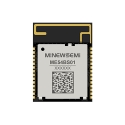
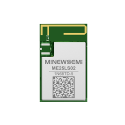
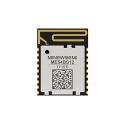
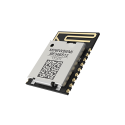
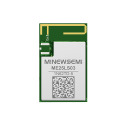
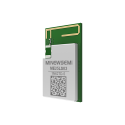
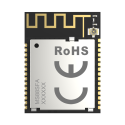
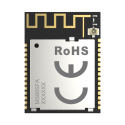
MinewSemi offers a comprehensive portfolio of wireless modules, including Bluetooth, Wi-Fi, LoRa, UWB, GNSS, and mmWave radar solutions. With pre-certified designs, flexible antenna options, and dedicated engineering support, developers can accelerate product development while minimizing RF design complexity.
Explore our wireless module portfolio or contact our engineering team to find the right connectivity solution for your next IoT project.













 Store
Store