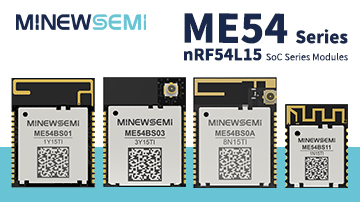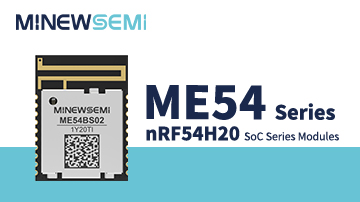


Choosing a Bluetooth module depends on six key factors: power consumption, communication range, processing capability, size, protocol support, and certification requirements.
The success of an IoT product often depends on one critical component that many developers overlook at the beginning of a project: the Bluetooth module.
Whether you're designing a smart home device, wearable, industrial sensor, medical product, or asset tracking system, the Bluetooth module directly affects wireless performance, battery life, certification costs, development complexity, and time-to-market.
However, choosing a Bluetooth module is no longer as simple as selecting a BLE chipset with sufficient range. Modern IoT products increasingly require support for Bluetooth Mesh, Matter, Thread, edge processing, enhanced security, and ultra-low-power operation.
So how do you choose the right Bluetooth module for your IoT project?
The answer depends on six key factors:
· Power consumption
· Communication range
· Processing capability
· Module size
· Protocol support
· Certification requirements
This guide explains each factor in detail and provides practical recommendations for selecting the best Bluetooth module for different IoT applications.
Many IoT developers focus heavily on application software and product features, but the wireless connectivity solution often determines the overall success of the product.
A poorly chosen Bluetooth module can lead to:
· Short battery life
· Unstable wireless performance
· Increased certification costs
· Delayed product launches
· Limited scalability
By contrast, selecting the right Bluetooth module early in development can significantly reduce engineering effort while improving product reliability.
Modern Bluetooth modules integrate:
· RF circuitry
· Antenna matching
· Bluetooth protocol stack support
· Security features
· Regulatory certifications
This allows developers to focus on product innovation rather than RF design challenges.
Before diving into technical details, use the following checklist as a starting point.
Requirement | What to Look For |
Battery-powered device | Ultra-low-power BLE SoC |
Long communication range | LE Coded PHY support |
Smart home products | Matter + Thread support |
Wearables | Compact module size |
Industrial IoT | High RX sensitivity |
Medical devices | Stable certifications |
Fast time-to-market | Pre-certified module |
Future-proof design | Bluetooth 5.4/6.0 ready |
If your project satisfies multiple requirements, prioritize long-term scalability rather than focusing solely on cost.
For battery-powered IoT devices, power consumption is often the most important consideration. Many products are expected to operate for months or even years without battery replacement.
Examples include:
· Wearables
· Smart tags
· Remote sensors
· Asset trackers
· Electronic shelf labels
When evaluating a Bluetooth module, pay attention to:
The amount of current consumed when the device is idle.
Current consumption during receiving and transmitting operations.
How quickly the module can transition from sleep mode to active operation.
Modern platforms such as Nordic's nRF54 Series are designed to deliver significantly improved performance-per-milliwatt compared with previous generations.
For battery-powered products, choosing a low-power architecture can often provide more value than selecting a module with maximum processing performance.
Bluetooth communication range varies significantly depending on:
· Antenna design
· Transmit power
· Receiver sensitivity
· Environmental conditions
· Bluetooth version
Many developers overestimate the required communication range.
For example:
Application | Typical Range Requirement |
Wearables | 10–30 m |
Smart Home Devices | 30–100 m |
Industrial Sensors | 100–500 m |
Outdoor Asset Tracking | 500 m+ |
Modern Bluetooth Low Energy devices support Long Range Mode (LE Coded PHY), which can significantly extend communication distance.
However, increasing range often reduces data throughput.
When evaluating range requirements, ask:
· Will the device operate indoors or outdoors?
· Are there walls or metal structures present?
· Is low latency important?
· Is data throughput critical?
Choosing the right balance is often more important than simply maximizing range.
Today's Bluetooth modules are no longer just wireless communication devices.
Many now serve as the primary processor for the entire product.
This is particularly important for:
· Smart home controllers
· Medical devices
· Industrial monitoring systems
· Edge AI applications
Key specifications include:
Modern Bluetooth modules typically use ARM Cortex-M processors.
Required for:
· Application firmware
· OTA updates
· Security features
Important for:
· Bluetooth stacks
· Mesh networking
· Multiprotocol operation
Increasingly important for:
· Smart locks
· Medical devices
· Industrial infrastructure
Selecting a module with sufficient processing headroom can prevent costly redesigns later in the product lifecycle.
Physical size is becoming a critical consideration in many IoT applications.
Examples include:
· Smart watches
· Fitness trackers
· Health monitoring devices
· Portable sensors
· Patient monitoring equipment
· Smart remotes
· Smart glasses
· Wireless accessories
Smaller modules provide greater design flexibility but may require trade-offs in antenna performance or I/O availability.
Developers should evaluate:
· PCB footprint
· Antenna requirements
· Available GPIO resources
· Manufacturing constraints
The smallest module is not always the best option if it limits future product expansion.
One of the biggest mistakes developers make is selecting a Bluetooth module based only on current requirements.
Connectivity standards continue to evolve rapidly.
A module selected today may need to support new protocols several years from now.
Important protocols include:
The foundation of most modern IoT products.
Ideal for:
· Smart lighting
· Building automation
· Large-scale sensor networks
Increasingly important for smart home ecosystems.
Matter has become one of the most significant developments in the smart home industry. Devices supporting Matter can interoperate across ecosystems from major technology companies.
Still widely used in:
· Smart lighting
· Home automation
· Industrial controls
Selecting a multiprotocol-capable Bluetooth module provides greater flexibility for future product development.
Wireless certification is often underestimated during product planning.
Failure to consider certification requirements early can result in substantial costs and delays.
Common certifications include:
· FCC (United States)
· CE (Europe)
· IC (Canada)
· TELEC (Japan)
· KC (South Korea)
· RCM (Australia/New Zealand)
Pre-certified Bluetooth modules offer several advantages:
· Faster market entry
· Reduced testing costs
· Lower regulatory risk
· Simplified product approval process
For startups and small engineering teams, certification support can be just as important as technical performance.
One of the most common questions IoT developers face during product development is whether to use a Bluetooth module or design directly around a Bluetooth chip (Bluetooth SoC).
While both approaches can provide Bluetooth connectivity, they differ significantly in terms of development complexity, cost, certification requirements, and time-to-market.
For most IoT projects, the decision ultimately comes down to balancing engineering resources, product volume, and development risk.
A Bluetooth module is a pre-engineered wireless solution that integrates all essential RF components into a ready-to-use package.
A typical Bluetooth module includes:
· Bluetooth SoC (System-on-Chip)
· RF matching circuitry
· Crystal oscillator
· Antenna or antenna connector
· Shielding
· Pre-tested RF design
· Regulatory certifications
Because these components are already integrated and optimized, developers can quickly add Bluetooth functionality to their products without becoming RF experts.
The module is typically mounted directly onto the product PCB and connected through standard interfaces such as UART, SPI, I²C, or GPIO.
A Bluetooth chip, often called a Bluetooth SoC, is the wireless integrated circuit at the heart of a Bluetooth device.
Unlike a module, the chip does not include:
· Antenna
· RF matching network
· Crystal
· Shielding
· Certifications
Developers must design these elements themselves.
Using a Bluetooth chip provides greater design flexibility but also requires substantial RF engineering expertise and additional validation work.
This approach is commonly used by large manufacturers producing millions of units annually, where reducing per-unit cost becomes a major priority.
Factor | Bluetooth Module | Bluetooth Chip |
Development Time | Fast | Longer |
RF Design Required | No | Yes |
Certification Effort | Low | High |
Time-to-Market | Faster | Slower |
Engineering Complexity | Lower | Higher |
BOM Cost | Higher | Lower |
Design Flexibility | Moderate | High |
Manufacturing Risk | Lower | Higher |
Suitable for Startups | Excellent | Challenging |
Suitable for Mass Production | Good | Excellent |
For most product teams, development time is one of the biggest differentiators.
With a Bluetooth module, engineers can immediately focus on:
· Application firmware
· User experience
· Product functionality
The RF design has already been optimized and validated by the module manufacturer.
In contrast, a Bluetooth chip requires additional work, including:
· RF layout design
· Antenna design
· Impedance matching
· Signal integrity optimization
· RF testing and tuning
Even a small mistake in RF design can significantly reduce communication range and wireless reliability.
As a result, projects based on Bluetooth chips often require longer development cycles.
Certification is another major consideration.
Products sold internationally typically require certifications such as:
· FCC (United States)
· CE (Europe)
· IC (Canada)
· TELEC (Japan)
· KC (South Korea)
When using a pre-certified Bluetooth module, much of the RF testing has already been completed.
This can help:
· Reduce certification costs
· Shorten approval timelines
· Lower compliance risks
When using a Bluetooth chip, the entire wireless subsystem must typically undergo full RF certification testing, which can significantly increase both cost and project timelines.
For startups and small development teams, certification savings alone can justify the use of a Bluetooth module.
Many engineers initially assume that choosing a Bluetooth chip is always cheaper.
However, this is only partially true.
Advantages:
· Lower development cost
· Lower certification cost
· Lower risk
Disadvantages:
· Higher unit price
Advantages:
· Lower unit cost
· Greater customization
Disadvantages:
· Higher engineering cost
· Higher certification cost
· Higher validation cost
For low- to medium-volume products, the total project cost of a Bluetooth module is often lower than a chip-based design.
Bluetooth chips generally become more cost-effective only when production volumes reach hundreds of thousands or millions of units.
Bluetooth chips provide maximum design freedom.
Developers can:
· Create custom antenna designs
· Optimize PCB layouts
· Reduce overall device size
· Customize power architectures
This makes chip-based solutions attractive for products with extremely strict size or cost requirements.
Bluetooth modules, on the other hand, offer a standardized solution that prioritizes reliability and simplicity.
For most IoT products, this trade-off is acceptable and often desirable.
A Bluetooth module is usually the best choice if:
✔ You want to shorten development time
✔ Your team lacks RF expertise
✔ Fast certification is important
✔ Production volumes are moderate
✔ Reliability is a higher priority than minimizing BOM cost
✔ You are developing smart home, industrial IoT, medical, or wearable products
A Bluetooth chip may be the better choice if:
✔ You have experienced RF engineers
✔ Production volume is extremely high
✔ Every cent of BOM cost matters
✔ You require a highly customized hardware design
✔ You are willing to invest additional time in RF validation and certification
For most IoT startups, product teams, and OEM manufacturers, a Bluetooth module provides the best balance of performance, development speed, certification simplicity, and project risk reduction.
Bluetooth chips are typically the preferred option only for very high-volume products where engineering resources and production scale justify the additional design effort.
Not all Bluetooth modules are designed for the same use case.
Below are recommendations based on common IoT applications.
Typical products:
· Smart switches
· Smart locks
· Sensors
· Lighting systems
Key requirements:
· Matter support
· Thread compatibility
· Bluetooth commissioning
· Low power consumption
Recommended priorities:
1. Multiprotocol support
2. Security
3. Future compatibility
Typical products:
· Smart watches
· Fitness trackers
· Health monitors
Key requirements:
· Ultra-low power
· Compact size
· Stable wireless performance
Recommended priorities:
1. Battery life
2. Small footprint
3. Fast wake-up performance
Typical products:
· Predictive maintenance sensors
· Factory monitoring equipment
· Asset tracking systems
Key requirements:
· Long range
· Reliability
· Industrial certifications
Recommended priorities:
1. RX sensitivity
2. Stable operation
3. Long-term supply support
Typical products:
· Patient monitoring systems
· Portable healthcare devices
· Connected diagnostics
Key requirements:
· Security
· Reliability
· Regulatory compliance
Recommended priorities:
1. Certification support
2. Security architecture
3. Stable firmware ecosystem
Many product delays can be traced back to mistakes made during component selection.
Here are some of the most common pitfalls.
The cheapest module is rarely the most cost-effective option.
Hidden costs often include:
· Certification expenses
· Additional development time
· RF troubleshooting
· Firmware modifications
Many devices initially require only BLE.
However, future product updates may require:
· Matter
· Thread
· Bluetooth Mesh
Choosing a scalable platform can avoid expensive redesigns.
Certification can account for a significant portion of development budgets.
Using a pre-certified module often reduces both cost and risk.
Bluetooth performance depends heavily on antenna design.
A high-performance chipset paired with a poorly optimized antenna may still deliver poor real-world results.
As firmware grows over time, memory limitations become increasingly problematic.
Selecting a module with adequate Flash and RAM capacity helps ensure long-term product viability.
As IoT technology evolves, developers should prioritize modules that support emerging trends.
Bluetooth 5.4 introduces features that improve efficiency for large-scale IoT deployments.
Benefits include:
· Enhanced energy efficiency
· Improved electronic shelf label support
· Better scalability
Bluetooth 6.0 is expected to drive the next generation of location-aware applications.
Potential benefits include:
· Improved channel sounding
· More accurate distance measurement
· Enhanced positioning capabilities
Matter is rapidly becoming a requirement for smart home products.
Developers should evaluate:
· Matter compatibility
· Thread networking support
· Long-term ecosystem support
The rise of intelligent edge devices is increasing demand for modules with greater processing resources.
Examples include:
· Predictive maintenance
· Human presence detection
· Intelligent sensors
· Smart healthcare devices
The best Bluetooth module depends on the application's requirements, including power consumption, communication range, protocol support, processing resources, and certification needs.
Start by evaluating six factors:
· Power consumption
· Range
· Processing capability
· Module size
· Protocol support
· Certifications
These factors usually determine long-term product success more than initial component cost.
Bluetooth 5.4 focuses on efficiency improvements for IoT deployments, while Bluetooth 6.0 introduces advanced location-aware capabilities and enhanced wireless performance.
For most IoT projects, Bluetooth modules reduce risk, simplify certification, and accelerate development. Bluetooth chips are generally more suitable for high-volume products with dedicated RF engineering resources.
Smart home devices should prioritize modules that support Bluetooth LE, Thread, and Matter to ensure compatibility with modern ecosystems.
Yes. Bluetooth Low Energy remains one of the most widely adopted wireless technologies due to its low power consumption, strong ecosystem support, and broad device compatibility.
Choosing a Bluetooth module is one of the most important decisions in IoT product development. The right module can improve battery life, simplify certification, accelerate development, and ensure long-term product scalability.
When evaluating Bluetooth modules, developers should focus on six critical factors: power consumption, communication range, processing capability, module size, protocol support, and certification requirements.
Rather than selecting a module solely based on cost, successful IoT teams prioritize long-term product requirements, future protocol compatibility, and reliable technical support. By doing so, they can reduce development risk, shorten time-to-market, and build products that remain competitive as wireless technologies continue to evolve.
For organizations developing next-generation smart home, wearable, industrial, or medical devices, investing time in Bluetooth module selection early in the design process is often one of the highest-return decisions they can make.













 Store
Store