

GNSS technology has become an essential part of modern positioning and navigation systems. From vehicle tracking and drones to precision agriculture and industrial IoT devices, many connected products need accurate location information to understand where they are and how they are moving.
A GNSS module provides a practical way to add satellite positioning capabilities to an electronic device without designing a complete GNSS receiver from the ground up.
But what exactly is a GNSS module? How does it work? What is the difference between GNSS and GPS? And what specifications should you consider when choosing a GNSS module for an IoT or embedded application?
This guide explains the fundamentals of GNSS modules, their key specifications, common applications, and the main factors to consider during module selection and integration.
GNSS stands for Global Navigation Satellite System. It is a general term for satellite-based systems that provide positioning, navigation, and timing (PNT) information on a global or regional basis.
GPS is one of the best-known GNSS systems, but it is not the only one. Other major satellite navigation systems include Galileo, BeiDou, and GLONASS. Regional systems such as QZSS and NavIC also contribute to satellite-based positioning.
A GNSS receiver can use signals from one or multiple satellite constellations to calculate the position of a receiver on Earth. Using multiple constellations can increase the number of available satellites and improve positioning availability in many environments.
System | Operator | Coverage |
GPS | United States | Global |
Galileo | European Union | Global |
BeiDou | China | Global |
GLONASS | Russia | Global |
QZSS | Japan | Regional, with GPS augmentation |
NavIC | India | Regional |
The term GNSS therefore describes the broader satellite navigation ecosystem, while GPS refers specifically to the U.S. Global Positioning System.
A GNSS module is an electronic module that receives and processes satellite navigation signals and provides positioning, navigation, and timing information to a host device.
Instead of designing the RF receiver, baseband processing, timing circuitry, and other supporting hardware independently, developers can integrate a ready-to-use GNSS module into their product.
A typical GNSS module may include:
GNSS receiver chipset
RF front-end circuitry
Baseband processor
Memory
Crystal or TCXO
Power management components
Antenna interface
Host communication interface
The basic system can be understood as:
GNSS Satellites → GNSS Antenna → GNSS Module → Host MCU → Application
The antenna receives satellite signals, while the GNSS module processes those signals and calculates positioning information. The host microcontroller or processor can then use the location data in the application.
Depending on the module, the output may include latitude, longitude, altitude, speed, heading, UTC time, satellite information, and other positioning data.
The basic operation of a GNSS module involves several stages.
GNSS satellites continuously transmit signals containing timing and navigation information. These signals allow a receiver to determine the distance between itself and individual satellites.
GPS, for example, uses satellites that transmit signals containing information about satellite position and time. A GPS receiver uses these signals to calculate its three-dimensional position and time.
The GNSS antenna captures signals from satellites that are visible to the receiver.
Antenna performance and placement are important because GNSS signals arriving at the Earth's surface are relatively weak. Obstructions, reflections, electromagnetic interference, and poor antenna placement can all affect positioning performance.
This means that a high-performance GNSS module alone does not guarantee high positioning accuracy. The antenna, PCB layout, power supply, RF environment, and physical installation can also have a significant impact on the final result.
Inside the module, the receiver processes the incoming satellite signals and extracts the information required for positioning.
Depending on the module architecture, the receiver may support multiple satellite constellations and frequency bands. Supporting more constellations can provide access to more satellites, while multi-band receivers can use signals on different frequencies for improved positioning performance in supported applications.
The receiver uses the measured satellite signal information to calculate the device's location.
The resulting positioning solution typically includes:
Latitude
Longitude
Altitude
Time
Speed
Heading
Position fix status
Satellite information
The receiver needs signals from multiple satellites to determine a position. In simplified terms, it compares the timing information received from different satellites to estimate its distance from them and calculate its location.
After calculating a position, the GNSS module sends the data to the host system through an available communication interface.
UART is commonly used in embedded GNSS applications, while some modules may also support interfaces such as I²C or SPI.
GNSS receivers frequently output standardized NMEA messages, allowing host systems to parse commonly used positioning information.
The exact output depends on the module and receiver chipset, but common GNSS data includes:
Data | Description |
Latitude | North-south position |
Longitude | East-west position |
Altitude | Height information |
Speed | Current movement speed |
Heading | Direction of movement |
UTC Time | Coordinated Universal Time |
Satellite Count | Number of satellites tracked or used |
Fix Status | Current positioning status |
This information can then be combined with other sensor or communication technologies.
For example, a fleet tracker may combine GNSS positioning with cellular connectivity to send vehicle locations to a cloud platform. A drone may combine GNSS data with an IMU and flight controller to support navigation and positioning.
Not all GNSS modules are designed for the same applications. When comparing different modules, it is important to look beyond the basic positioning function.
Positioning accuracy is one of the most important specifications.
Standard GNSS modules can provide meter-level positioning under suitable conditions, while high-precision GNSS technologies such as RTK can achieve much higher accuracy when appropriate correction data and system configurations are available.
The required accuracy depends heavily on the application. A basic asset tracker may not need centimeter-level positioning, while surveying, precision agriculture, machine control, and certain drone applications may require significantly higher accuracy.
Check which satellite systems the module supports.
Common constellations include GPS, Galileo, BeiDou, GLONASS, QZSS, NavIC, and SBAS.
Multi-constellation support allows a receiver to use signals from different satellite systems. This can increase satellite availability and help maintain positioning in challenging environments.
GNSS modules can be categorized by the frequency bands they support.
A single-band receiver uses signals from one primary frequency band, while dual-band or multi-band receivers can process signals across multiple frequencies.
Multi-band GNSS can provide advantages in applications that require higher positioning performance, particularly when combined with suitable correction technologies.
GNSS sensitivity indicates how well a receiver can detect and process weak satellite signals.
Sensitivity can be especially relevant in environments where the satellite signal is attenuated or partially obstructed, such as urban areas or locations near buildings and other structures.
However, sensitivity should not be considered independently from antenna performance, RF design, interference, and the surrounding environment.
Time to First Fix (TTFF) describes how long a GNSS receiver takes to obtain a valid positioning solution.
Specifications may distinguish between:
Cold start
Warm start
Hot start
The actual TTFF depends on factors such as satellite visibility, available assistance data, receiver state, signal conditions, and the environment.
For battery-powered trackers and portable devices, fast positioning can be particularly useful because it can reduce the time required for a device to obtain location information after startup.
The update rate determines how frequently the module provides new positioning information. Common update rates include 1 Hz, 5 Hz, and 10 Hz, while some high-performance modules can support higher rates. A higher update rate can be useful for moving platforms such as drones, vehicles, and robotics, but it may also increase processing and power requirements.
The communication interface determines how the GNSS module communicates with the host processor.
Common interfaces include:
UART
I²C
SPI
USB
UART remains widely used for embedded GNSS applications because of its straightforward implementation and compatibility with many microcontrollers.
GNSS modules may use an integrated antenna or an external antenna connection.
External antenna interfaces can provide greater flexibility when the antenna needs to be positioned away from the main PCB or placed in a location with better sky visibility.
Common external antenna configurations may use connectors such as U.FL or other RF connectors, depending on the module design.
Power consumption is another important consideration, especially for battery-powered products.
Asset trackers, portable devices, and other low-power IoT products may need to balance positioning performance, update rate, startup time, and operating current against battery life.
The terms GNSS module and GPS module are sometimes used interchangeably, but they technically describe different things.
GPS is one satellite navigation system, while GNSS is the broader term covering multiple satellite navigation systems.
A GPS module may primarily refer to a receiver designed around GPS signals. A modern GNSS module can support multiple constellations, such as GPS, Galileo, BeiDou, and GLONASS.
GNSS Module | GPS Module | |
Definition | Module supporting one or more GNSS systems | Commonly refers to a module using GPS |
Supported systems | GPS, Galileo, BeiDou, GLONASS, etc. | Primarily GPS |
Satellite availability | Can use multiple constellations | Mainly depends on GPS |
Modern embedded usage | Widely used for multi-constellation positioning | Still common as a search and product term |
In practice, users may search for "GPS module" even when they need a multi-constellation GNSS solution. For this reason, both terms are commonly seen in the embedded positioning market.
GNSS modules are used across a wide range of connected devices.
GNSS modules allow tracking devices to determine the location of vehicles, equipment, containers, and other outdoor assets.
When combined with cellular, LoRaWAN, Wi-Fi, or other communication technologies, GNSS can provide the location data needed for remote asset monitoring.
Fleet management systems use GNSS positioning to monitor vehicle locations, routes, speed, and movement.
A GNSS module can provide positioning data to the vehicle's main controller, which can then transmit the information to a cloud platform or fleet management system.
GNSS provides essential positioning information for many drone systems.
Depending on the application, standard GNSS may be sufficient for basic positioning, while RTK GNSS can be used when higher precision is required for navigation, mapping, surveying, or automated flight operations.
GNSS is widely used in precision agriculture applications, including agricultural machinery, field mapping, autonomous equipment, and guidance systems.
Higher-precision GNSS technologies can help agricultural equipment maintain accurate paths and positions across large fields.
Outdoor industrial equipment can use GNSS for location tracking, fleet management, logistics, and operational monitoring.
GNSS can also provide precise timing information for systems that need a common time reference.
GNSS modules can add outdoor positioning capabilities to portable products such as sports devices, outdoor equipment, and tracking products.
For these applications, module size and power consumption can be just as important as positioning performance.
Using a GNSS module instead of developing the complete receiver hardware independently can simplify product development.
The main GNSS receiver circuitry is integrated into the module, reducing the amount of RF and positioning hardware that developers need to design themselves.
Small GNSS modules can be integrated into compact IoT and embedded devices where PCB space is limited.
Modules supporting multiple satellite constellations can access signals from different GNSS systems, increasing the number of positioning sources available to the receiver.
Common host interfaces make it easier to connect the GNSS module with microcontrollers and application processors.
The GNSS module market includes solutions ranging from standard positioning modules to high-precision RTK solutions, allowing developers to select hardware according to the needs of their application.
The right GNSS module depends on the actual requirements of the product rather than a single specification.
Start by defining the positioning accuracy required by your application.
If meter-level positioning is sufficient, a standard GNSS module may be appropriate. If the application requires centimeter-level positioning, consider an RTK-capable solution.
Determine which satellite systems are required for your target market and application.
Multi-constellation support can be useful when positioning availability and reliability are important.
GNSS performance can vary significantly between open-sky environments, urban areas, areas surrounded by buildings, and locations with partial sky visibility.
Consider where the device will be installed and how much satellite visibility is available.
The antenna should be considered as part of the overall GNSS solution.
Depending on the product design, you may choose an integrated antenna or an external GNSS antenna. Antenna placement, ground design, cable length, and surrounding materials can all influence performance.
Make sure the GNSS module provides a communication interface compatible with your host MCU or processor.
UART is a common choice, but other interfaces may be useful depending on the system architecture.
For portable and battery-powered products, compare operating current, startup behavior, update rate, and module dimensions.
A module that meets the positioning requirements but consumes more power or occupies too much PCB space may not be suitable for the final product.
If the application requires high-precision positioning, investigate RTK, dual-band GNSS, raw observation data, dead reckoning, or other advanced technologies.
The requirements should be defined at the system level because high-precision positioning often depends on more than the GNSS receiver alone.
Selecting a suitable GNSS module is only the first step. Proper integration is also important for achieving reliable positioning performance.
Whenever possible, the antenna should have a clear view of the sky and be positioned away from significant sources of RF interference.
For external antennas, the installation position should be considered during the mechanical design stage rather than added after the PCB has been finalized.
Keep sensitive RF circuits away from noisy digital components and high-current switching circuits where possible.
The PCB ground design, antenna feed line, connector layout, and surrounding components should follow the module manufacturer's hardware recommendations.
GNSS receivers process relatively weak signals, so power supply noise and electromagnetic interference can affect system performance.
A stable power supply and appropriate filtering can help create a cleaner operating environment for the receiver.
The host processor should be configured according to the module's communication parameters and output protocol.
If the application only needs basic location data, a standard NMEA output may be sufficient. More advanced applications may require additional positioning or raw measurement data.
For industrial and outdoor products, also consider operating temperature, storage temperature, vibration, moisture, enclosure design, and other environmental requirements.
For IoT devices, a GNSS module often needs to balance several requirements at the same time.
A suitable module may need to offer:
Compact dimensions
Low power consumption
Reliable positioning
Multi-constellation support
Suitable positioning accuracy
Flexible host interfaces
Appropriate antenna options
Fast positioning
Long-term product availability
This is why GNSS module selection should start with the application requirements rather than simply choosing the receiver with the highest number of specifications.
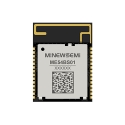
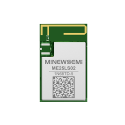
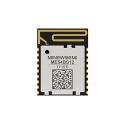
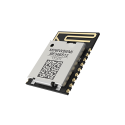
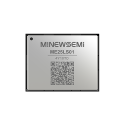
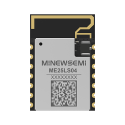
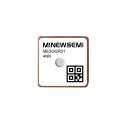
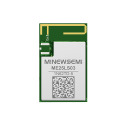
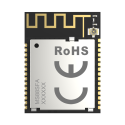
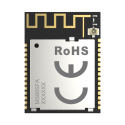
For developers looking for different positioning options, MinewSemi provides a range of GNSS modules covering standard positioning, multi-constellation GNSS, dual-band, high-precision, dead reckoning, and other configurations. The product portfolio includes compact modules as well as solutions designed for RTK and higher-precision positioning applications.
One example is the ME3RGR11, which supports full-band and multi-constellation GNSS, 1–10 Hz RTK output, and 1–20 Hz position and raw observation output. This type of module can be considered for applications where standard positioning capabilities need to be extended toward higher-precision positioning.
A GNSS module is a compact electronic module that receives signals from satellite navigation systems and calculates positioning information such as latitude, longitude, altitude, speed, and time.
No. GPS is one GNSS constellation operated by the United States. GNSS is the broader term for satellite navigation systems, including GPS, Galileo, BeiDou, and GLONASS.
Accuracy depends on the receiver, antenna, satellite visibility, environment, correction services, and positioning technology. Standard GNSS generally provides meter-level positioning under suitable conditions, while RTK can provide much higher accuracy when the required correction data and system configuration are available.
Yes. A GNSS receiver needs an antenna to receive satellite signals. Depending on the module, the antenna may be integrated into the design or connected externally.
GNSS signals are designed for outdoor satellite reception and can be significantly weakened indoors. Positioning performance therefore depends heavily on building construction, window access, signal attenuation, and the specific environment.
Standard GNSS calculates a position using satellite signals received directly by the receiver. RTK uses additional correction information to achieve substantially higher positioning accuracy.
UART is widely used, while some GNSS modules also support interfaces such as I²C, SPI, or USB.
TTFF stands for Time to First Fix. It describes how long a GNSS receiver takes to obtain a valid positioning solution after startup or a loss of positioning data.
The appropriate module depends on the application's accuracy, size, power consumption, antenna, interface, operating environment, and positioning requirements. Standard GNSS modules may be sufficient for general tracking, while RTK or other high-precision modules are more suitable for applications requiring greater positioning accuracy.
A GNSS module provides a practical way to add satellite positioning and timing capabilities to IoT and embedded devices. By integrating the main GNSS receiver components into a compact module, it can simplify hardware development while providing access to satellite positioning data.
When selecting a GNSS module, developers should consider more than positioning accuracy alone. Supported GNSS constellations, frequency bands, sensitivity, TTFF, update rate, communication interface, antenna configuration, power consumption, and environmental requirements can all influence the suitability of a module for a particular product.
For applications ranging from asset tracking and fleet management to drones, precision agriculture, and industrial IoT, understanding these factors can help developers build a more reliable positioning system.
As positioning requirements become more diverse, GNSS modules are also evolving from basic GPS receivers toward multi-constellation, multi-band, RTK, dead reckoning, and other high-performance solutions. Choosing the right GNSS module therefore starts with understanding the actual positioning requirements of the application and matching them with the appropriate hardware and system architecture.














 Store
Store