

.jpg)
As the number of connected devices continues to grow, traditional wireless communication methods are facing new challenges. Many IoT applications, such as smart buildings, industrial automation, smart lighting, and large-scale sensor networks, require hundreds or even thousands of devices to communicate reliably within the same environment.
This is where Bluetooth Mesh technology becomes increasingly important.
Unlike traditional Bluetooth connections that are mainly designed for one-to-one communication, Bluetooth Mesh enables many-to-many communication between devices. It allows large networks of Bluetooth Low Energy (BLE) devices to exchange information efficiently, making it suitable for scalable IoT applications.
From commercial lighting systems to industrial monitoring networks, Bluetooth Mesh provides a flexible, low-power, and reliable wireless solution for connecting large numbers of devices.
This article explains:
· What Bluetooth Mesh is
· How Bluetooth Mesh works
· The key benefits of Bluetooth Mesh for IoT
· Common Bluetooth Mesh applications
· How to choose the right Bluetooth Mesh module for your project
Bluetooth Mesh is a many-to-many communication network based on Bluetooth Low Energy (BLE) technology that enables thousands of devices to communicate with each other over a scalable wireless network.
Unlike traditional Bluetooth connections, which typically involve a direct connection between two devices, Bluetooth Mesh allows multiple devices to participate in a network where information can travel through multiple nodes.
Bluetooth Mesh was officially introduced by the Bluetooth Special Interest Group (Bluetooth SIG) in 2017 to address the growing demand for large-scale IoT connectivity. It is designed specifically for applications where many devices need to communicate within a building, factory, or other large environment.
Typical Bluetooth Mesh applications include:
· Smart lighting systems
· Building automation
· Industrial sensor networks
· Commercial IoT deployments
· Healthcare monitoring systems
To understand the advantages of Bluetooth Mesh, it is important to compare it with traditional Bluetooth Low Energy communication.
Traditional Bluetooth is mainly designed for direct connections between devices.
Examples:
· Smartphone connected to smartwatch
· Phone connected to wireless headphones
· Tablet connected to keyboard
This communication model works well for personal devices but becomes difficult to scale when hundreds of devices need to communicate.
Bluetooth Mesh introduces a new network model.
Feature | Traditional Bluetooth | Bluetooth Mesh |
Communication Type | One-to-one | Many-to-many |
Network Structure | Star topology | Mesh topology |
Number of Devices | Limited | Thousands of nodes |
Coverage Area | Short range | Large-scale deployment |
Main Applications | Personal devices | IoT networks |
Expansion Capability | Limited | Highly scalable |
The key difference is that Bluetooth Mesh transforms Bluetooth from a simple device-to-device communication technology into a large-scale networking solution.
Understanding how Bluetooth Mesh works requires looking at its network architecture and communication mechanism.
A Bluetooth Mesh network consists of multiple devices called nodes. Each node can communicate with other nodes and help transfer messages throughout the network.
The main components include:
· Nodes
· Elements
· Models
· Messages
· Provisioning
· Relay functionality
Examples of nodes include:
· Smart light bulbs
· Wall switches
· Temperature sensors
· Industrial sensors
· Smart controllers
Each node can perform specific functions depending on its hardware capabilities and software configuration.
For example:
A smart lighting device may contain:
· One element controlling brightness
· One element controlling color
· One element reporting device status
A single physical product may contain multiple elements.
Bluetooth Mesh uses standardized models to ensure interoperability between devices from different manufacturers.
Examples:
· Generic On/Off Model
· Light Lightness Model
· Sensor Model
Models allow developers to create compatible devices without designing custom communication protocols.
Messages contain information such as:
· Commands
· Status updates
· Sensor data
For example:
A smart building controller can send a message:
"Turn off all lights on the second floor."
The message can travel through multiple nodes until it reaches the target devices.
One of the most important features of Bluetooth Mesh is its communication method called managed flooding. Unlike traditional wireless networks that rely on a central router or gateway, Bluetooth Mesh allows messages to be transmitted through multiple nodes.
When one device sends a message:
1. Nearby nodes receive the message.
2. Relay-enabled nodes forward the message.
3. The message reaches the destination device.
This approach provides several advantages:
· No single point of failure
· Improved network reliability
· Flexible network expansion
· Wider coverage
If one communication path becomes unavailable, another path can still deliver the message.
The provisioner is responsible for adding new devices into the network.
Functions include:
· Device authentication
· Network configuration
· Security setup
Examples:
· Smartphone application
· Gateway device
· Dedicated controller
Relay nodes extend network coverage by forwarding messages.
Examples:
· Smart lighting devices
· Powered sensors
· Building controllers
Low Power Nodes are designed for battery-operated devices.
Examples:
· Temperature sensors
· Door sensors
· Battery-powered switches
LPN devices minimize power consumption by communicating with a Friend Node.
Friend Nodes store messages for Low Power Nodes and deliver them when needed.
This allows battery-powered devices to remain in sleep mode most of the time.
Bluetooth Mesh has become increasingly popular because it addresses several challenges faced by large-scale IoT deployments.
One of the biggest advantages of Bluetooth Mesh is its ability to support large numbers of connected devices. Traditional Bluetooth connections are limited when many devices need to communicate simultaneously. Bluetooth Mesh solves this problem by creating a distributed network.
This makes it suitable for:
· Office buildings
· Shopping centers
· Factories
· Warehouses
· Smart campuses
For example, a commercial lighting system may include thousands of LED fixtures. Bluetooth Mesh allows each lighting device to become part of the network, enabling centralized control and flexible expansion.
Reliability is critical for industrial and commercial IoT applications.
Bluetooth Mesh improves reliability through:
· Multiple communication paths
· Relay nodes
· Distributed network architecture
Unlike centralized wireless systems, Bluetooth Mesh does not depend on a single access point. If one device fails, other nodes can continue transferring information through alternative routes.
Because Bluetooth Mesh is built on Bluetooth Low Energy technology, it maintains the power efficiency that makes BLE popular.
This is especially important for:
· Battery-powered sensors
· Smart locks
· Environmental monitoring devices
· Asset tracking systems
Low Power Nodes allow devices to remain inactive most of the time, significantly extending battery life.
One of the greatest advantages of Bluetooth Mesh is its scalability. As IoT deployments grow, new devices can be added without redesigning the entire wireless infrastructure.
Unlike traditional point-to-point Bluetooth networks, where adding more devices often increases complexity, Bluetooth Mesh is designed to expand naturally.
For example, imagine an office building initially equipped with 100 smart lights. As the building expands, hundreds of additional lights, occupancy sensors, and wall switches can be added to the existing Bluetooth Mesh network with minimal changes to the system architecture.
This flexibility makes Bluetooth Mesh particularly attractive for:
· Commercial buildings
· Hotels
· Hospitals
· Universities
· Smart factories
For organizations planning long-term IoT deployments, scalability is often just as important as wireless performance.
Security is a fundamental design principle of Bluetooth Mesh.
Unlike many legacy wireless protocols that rely primarily on network-level encryption, Bluetooth Mesh incorporates multiple layers of security to help protect communications and devices.
Key security features include:
· AES-CCM encryption
· Device authentication
· Network encryption
· Application encryption
· Secure provisioning
· Replay attack protection
Each device joining the network must first be provisioned securely before it can participate in communication. This layered security architecture makes Bluetooth Mesh suitable for applications where data integrity and access control are essential, including smart buildings, healthcare environments, and industrial automation.
Bluetooth Mesh has become one of the most widely adopted networking technologies for large-scale Bluetooth Low Energy deployments. Its flexibility makes it suitable for a wide range of industries.
Smart lighting remains the most successful commercial application of Bluetooth Mesh.
In large buildings, every lighting fixture can function as a network node, allowing administrators to manage thousands of lights through a single control system.
Typical use cases include:
· Office lighting
· Retail stores
· Hotels
· Hospitals
· Parking garages
· Street lighting
Bluetooth Mesh allows lighting systems to support:
· Group control
· Scene control
· Occupancy-based lighting
· Daylight harvesting
· Remote monitoring
Because each light can relay messages, network coverage naturally expands as more fixtures are installed.
Modern commercial buildings require numerous connected devices working together.
Examples include:
· HVAC controllers
· Occupancy sensors
· Air quality monitors
· Window sensors
· Smart switches
· Access control systems
Bluetooth Mesh provides a unified wireless infrastructure that simplifies installation while reducing wiring costs. The ability to support thousands of devices makes it particularly suitable for intelligent building management systems.
Factories increasingly rely on wireless sensors to improve productivity and predictive maintenance.
Bluetooth Mesh supports applications such as:
· Equipment monitoring
· Machine status reporting
· Temperature sensing
· Vibration monitoring
· Environmental monitoring
· Worker safety systems
Its self-healing network architecture improves communication reliability in complex industrial environments.
Healthcare facilities also benefit from Bluetooth Mesh connectivity.
Possible applications include:
· Patient monitoring
· Medical equipment tracking
· Smart hospital lighting
· Environmental sensing
· Nurse call systems
Bluetooth Mesh enables reliable communication without requiring every device to maintain a direct connection to a central controller.
Bluetooth Mesh is increasingly being considered for smart city infrastructure.
Potential applications include:
· Smart street lighting
· Parking management
· Public information displays
· Environmental monitoring
· Traffic monitoring
As cities continue adopting IoT technologies, Bluetooth Mesh provides an energy-efficient networking option for distributed devices.
Selecting the right Bluetooth Mesh module is just as important as choosing the network architecture itself. While nearly all Bluetooth Mesh modules support the Mesh protocol, their capabilities can vary significantly in terms of processing power, RF performance, memory, and software support.
The following factors should be evaluated before selecting a module.
The Bluetooth SoC determines the module's processing capability, wireless performance, and long-term scalability.
Modern Bluetooth Mesh solutions are commonly based on advanced Bluetooth SoCs that provide:
· Low power consumption
· Sufficient Flash and RAM
· Hardware security
· Multiprotocol support
Choosing a modern platform also improves compatibility with future Bluetooth specifications.
Bluetooth Mesh applications generally require more memory than traditional BLE applications.
Developers should consider:
· Flash size
· RAM capacity
· OTA update requirements
· Future firmware expansion
Selecting a module with sufficient memory helps avoid redesigns as software becomes more sophisticated.
Reliable wireless communication depends on more than transmit power.
Important RF specifications include:
· Receiver sensitivity
· Output power
· Antenna efficiency
· PCB layout quality
Good RF performance improves network stability while reducing the number of relay nodes required.
Although many Bluetooth Mesh devices are powered from the mains, battery-powered devices such as sensors and switches still require low-power operation.
Evaluate:
· Sleep current
· Receive current
· Transmit current
· Wake-up time
Modules optimized for ultra-low-power operation can significantly extend battery life.
A strong software ecosystem can shorten development time considerably.
Look for modules that provide:
· SDK support
· Bluetooth Mesh examples
· Documentation
· OTA support
· Long-term firmware maintenance
Good software resources reduce integration effort and accelerate product development.
For commercial products, choosing a pre-certified Bluetooth Mesh module can simplify regulatory approval.
Common certifications include:
· FCC
· CE
· IC
· TELEC
· KC
· RCM
Using certified modules often reduces testing costs while accelerating time-to-market.
Although all Bluetooth Mesh modules are Bluetooth modules, not every Bluetooth module is intended for Mesh networking.
The main difference lies in software capabilities and intended applications.
Feature | Standard Bluetooth Module | Bluetooth Mesh Module |
Primary Network Type | Point-to-point or point-to-multipoint | Many-to-many Mesh network |
Typical Applications | Wearables, accessories, data transfer | Smart lighting, smart buildings, industrial IoT |
Network Size | Dozens of devices | Hundreds or thousands of nodes |
Scalability | Moderate | Excellent |
Relay Capability | No | Yes |
Firmware Requirements | Standard BLE stack | Bluetooth Mesh stack |
If your application only requires communication between a phone and a single peripheral device, a standard Bluetooth module is often sufficient. However, if the goal is to build a scalable wireless network covering an entire building or industrial facility, choosing a Bluetooth Mesh module is the better option.
Bluetooth Mesh is not the only wireless networking technology available for IoT applications. Developers often compare it with Zigbee and Wi-Fi when selecting a connectivity solution.
Feature | Bluetooth Mesh | Zigbee |
Wireless Standard | Bluetooth Low Energy | IEEE 802.15.4 |
Smartphone Compatibility | Native support on most smartphones | Usually requires a dedicated gateway |
Network Topology | Mesh | Mesh |
Power Consumption | Very low | Very low |
Ecosystem | Bluetooth ecosystem | Zigbee ecosystem |
Bluetooth Mesh has a significant advantage in smartphone interoperability, making commissioning and maintenance simpler for many applications.
Feature | Bluetooth Mesh | Wi-Fi |
Power Consumption | Low | Higher |
Data Rate | Moderate | High |
Network Size | Large | Moderate |
Battery Operation | Excellent | Limited |
Typical Applications | Sensors, lighting, automation | Cameras, multimedia, internet access |
Wi-Fi is ideal for high-bandwidth applications, while Bluetooth Mesh is better suited to low-power networks with many connected devices.
Bluetooth Mesh continues to evolve alongside broader IoT trends.
Several developments are expected to drive adoption over the coming years.
Building automation systems are becoming increasingly integrated, connecting lighting, HVAC, security, and occupancy sensing through unified wireless networks.
Manufacturers are deploying larger sensor networks for predictive maintenance, equipment monitoring, and energy management.
Bluetooth Mesh provides an efficient communication infrastructure for these deployments.
As edge computing becomes more common, Bluetooth Mesh nodes are expected to perform more local processing, reducing latency and minimizing cloud dependence.
Future Bluetooth specifications and ecosystem improvements are expected to simplify deployment while enhancing compatibility across vendors and devices.
Bluetooth Mesh is a many-to-many networking technology built on Bluetooth Low Energy that enables large numbers of devices to communicate through a self-forming, self-healing wireless network.
Bluetooth Mesh uses managed flooding, where relay-enabled nodes forward messages across multiple communication paths, allowing information to reach its destination without relying on a single central device.
A Bluetooth Mesh module is a Bluetooth Low Energy module that supports the Bluetooth Mesh protocol, enabling devices to participate in large-scale Mesh networks for applications such as smart lighting, building automation, and industrial IoT.
Bluetooth Mesh is designed to support networks ranging from a few devices to thousands of nodes, making it suitable for both small and large IoT deployments.
Not necessarily. Devices within the Mesh network communicate directly with one another. However, a gateway is commonly used when remote monitoring, cloud connectivity, or integration with other networks is required.
Neither technology is universally better. Bluetooth Mesh offers excellent smartphone compatibility and leverages the widespread Bluetooth ecosystem, while Zigbee has long been established in certain smart home and industrial applications. The best choice depends on the specific requirements of the project.
When selecting a Bluetooth Mesh module, evaluate:
· Bluetooth SoC platform
· Memory resources
· RF performance
· Power consumption
· Software ecosystem
· Certification support
Choosing a module that balances these factors will simplify development and improve long-term scalability.
Bluetooth Mesh has transformed Bluetooth Low Energy from a simple point-to-point communication technology into a scalable networking solution capable of connecting hundreds or even thousands of devices.
Its combination of low power consumption, reliable communication, strong security, and flexible network expansion makes it an excellent choice for smart lighting, building automation, industrial IoT, healthcare, and smart city applications.
When selecting a Bluetooth Mesh module, developers should look beyond basic Bluetooth specifications. Evaluating the underlying SoC platform, memory capacity, RF performance, software support, and certification status will help ensure the chosen module meets both current project requirements and future expansion needs.
As IoT deployments continue to grow in scale and complexity, Bluetooth Mesh is expected to play an increasingly important role in enabling reliable, secure, and energy-efficient wireless connectivity across a wide range of industries.



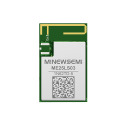
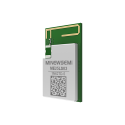
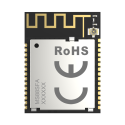










 Store
Store